Haut
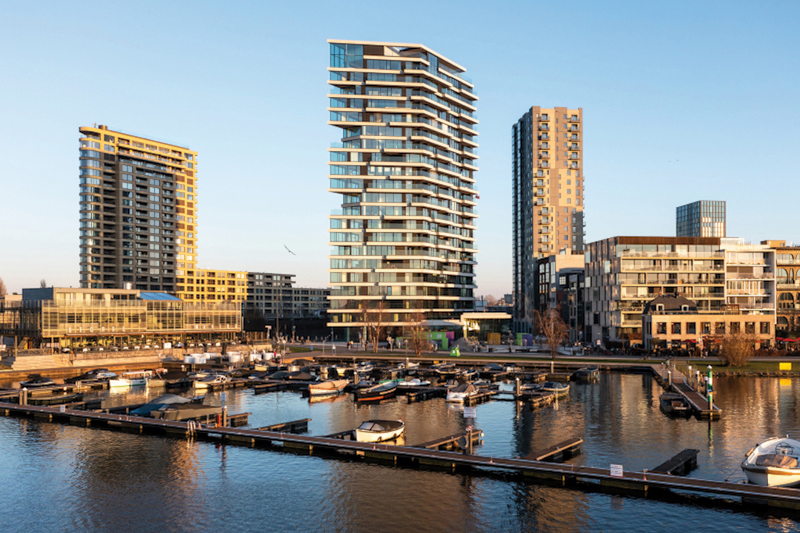
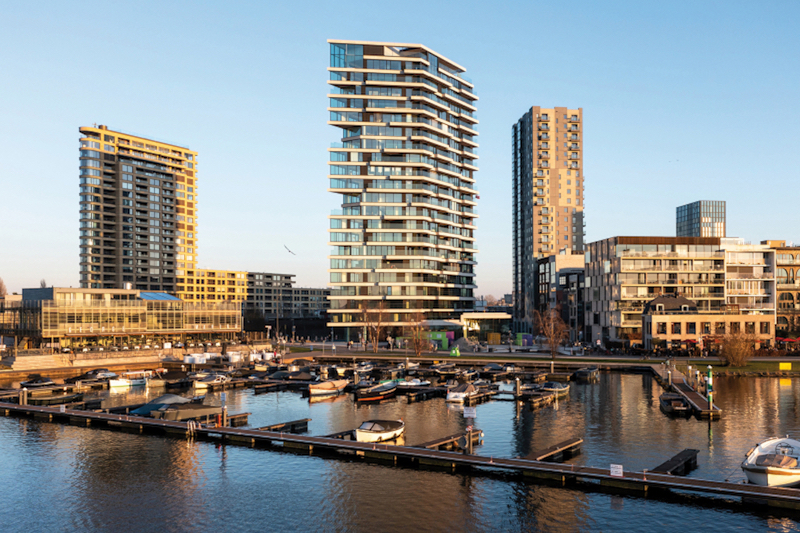
Project Haut in the Amstel Quarter in Amsterdam East is built with wood as the main building material. HAUT is a pioneering project, featuring an innovative wooden high-rise construction and energy-generating facades. Haut shows that building with wood is the future.
Living
HAUT has 52 luxury apartments for sale in a beautiful location with a special view. The area of the apartments ranges from 75 to over 300 square meters. The first buyers had freedom of choice in the size of their apartment, the number of floors, floor plans and the placement of double-height windows, loggias and balconies.
Architecture
There are no standard regulations for high-rise wooden buildings. Therefore, the design team put extra time and attention into technical innovation and safety. With a height of 73 meters, and 21 floors, Haut is the tallest wooden hybrid tower in the Netherlands. All-wood construction is not possible in watery and windy Amsterdam. Hybrid means that the floors and walls are made of wood, but the foundation, basement and elevator core are made of concrete.
Unlike most wooden buildings, only the interior walls of HAUT are load-bearing, which allowed for large room-high windows in the facade. The irregular pattern of balconies and the pronounced, double-height spaces overlooking the Amstel River make HAUT's architecture strikingly distinctive.
Sustainable
It is one of the most sustainable buildings in the world (BREEAM score Outstanding) and a good example of Dutch Design & Engineering. The supporting structure of HAUT is made of cross-laminated timber (CLT). The panels are prefabricated off-site, leading to low-waste production and quick and clean on-site assembly. But sustainability is also integrated into the design in other ways. Rainwater is collected from the roof and balconies and utilized for the roof gardens.